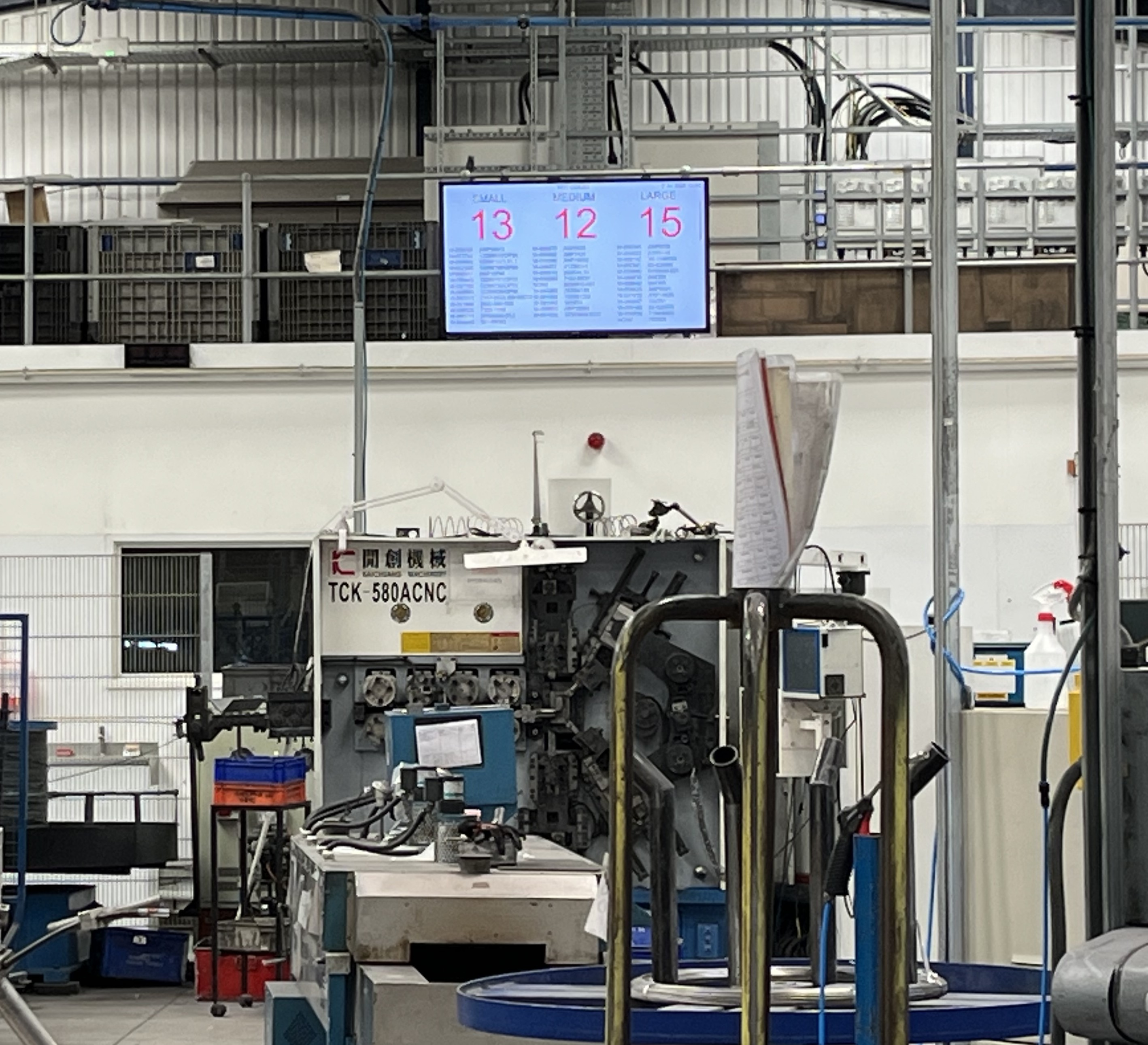

New Real-Time Data Production Dashboard Boosts Efficiency in Spring Production
For many manufacturers, production data exists - but getting it into the hands of the people who can act on it is often the real challenge.
At William Hughes that has changed with the introduction of a new real-time production dashboard that gives shop floor teams instant visibility of manufacturing priorities, enabling them to make informed decisions without waiting for updates from the office.
Displayed on two large rotating screens, the dashboard draws live information directly from the company's ERP system and updates every hour, providing operators with a constantly refreshed view of what needs attention.
The display uses a simple colour-coded system. Springs highlighted in orange are due within the next two weeks and have already been coiled, meaning they are progressing through operations such as grinding, heat treatment, shot peening or hand finishing. Items shown in red are more urgent - they are also required within the next two weeks but have not yet reached the coiling stage, signalling an urgent production priority.
To make the information even more actionable, jobs are grouped into small, medium and large spring categories, allowing teams to quickly identify and focus on the work most relevant to their area.
Previously, this critical production information was held within the office and communicated to the shop floor through periodic updates. By making the data visible to everyone in real time, employees can now see exactly what needs to be produced and adjust their work accordingly.
"The impact has been immediate", says Engineering Director Emma Burgon, "Our teams are responding to production priorities independently, without the need for constant communication or manual direction. Everyone can see what needs to happen next, and they are taking action".
As soon as production teams complete a coiling job, the information on the dashboard is automatically updated, removing the items from the priority list and ensuring the display always reflects the latest production status.
"It's not just about having data," says Burgon. "It's about making that data visible to the people at the coalface. When everyone can see the same information, decisions happen faster, communication becomes simpler, and we create a more connected and efficient manufacturing operation".